



Before Year-End: What Your CPA Needs to Know
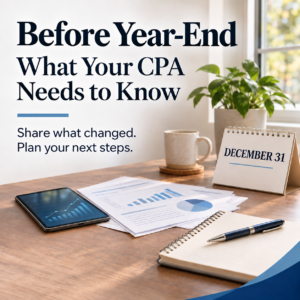 A change in your business or personal life can affect your taxes long before you file a return. Letting your CPA know now gives you time to review your options before December 31.
You don’t need to arrive with every document or know which tax rules apply. Open the conversation by sharing what changed, what you’re considering and any questions you have. Your CPA can then help identify the next steps.
Has your income changed?
Will your income be substantially higher or lower than last year? Perhaps your business had a strong year, you changed jobs or you received a sizable bonus. Investment gains, retirement withdrawals and income from a side business are also items you should discuss.
Share your latest pay statements and current business financial reports, along with estimates of additional income you expect. Your CPA can review the overall picture, including whether your withholding or estimated tax payments need attention.
Are you making business decisions before December 31?
Talk with your CPA before making a major equipment purchase, paying employee bonuses or changing how you pay yourself. These decisions affect both your taxes and available cash.
A tax deduction alone does not make a purchase worthwhile. Consider whether the expense aligns with your business goals and leaves enough cash for upcoming obligations.
Also mention plans to add an owner, sell the business, change its structure or close a location. Involving your CPA while decisions are still being considered allows more time to evaluate the tax and reporting implications.
Have you bought, sold or moved?
A home purchase, property sale or move to another state can change your tax picture. Rental property transactions and changes in how you use a property may also require a closer look.
If you moved or worked in more than one state, share the locations and dates with your CPA. Business owners should also mention employees working in new states or business activity outside their usual locations.
Keep closing statements, improvement records and related documents together so they are available for review.
Has your family situation changed?
Marriage, divorce, a new child or the death of a family member may affect your filing situation. Supporting an aging parent or another relative is also worth discussing.
Let your CPA know about changes involving trusts, estates, inheritances or substantial gifts. Even when a transaction does not create an immediate tax bill, there may be reporting requirements to review.
Are you planning gifts or retirement transactions?
Before making a significant charitable contribution, discuss what you intend to give and when. Cash, investments and other assets can involve different tax considerations and documentation requirements.
Retirement decisions deserve just as much attention. Tell your CPA about planned withdrawals, Roth conversions or inherited retirement accounts. Coordinate with your financial advisor and account custodian so everyone has the information needed to evaluate the transaction.
Preparing for the meeting
Prior to your meeting, email your CPA a brief outline of your changes and questions. This information may be helpful for your meeting:
- Recent pay statements and estimated tax payment records
- Current business profit and loss statements and balance sheets
- Details of significant investment or property transactions
- Plans for equipment purchases, bonuses or owner payments
- Information about retirement withdrawals and charitable gifts
- Dates and details of family, residency or ownership changes
Don’t wait for perfect records to reach out. An early conversation can identify missing information and point to the decisions that need attention before year-end.
Let’s review what changed
Your tax return looks back at the year. A year-end conversation gives you an opportunity to plan while there is still time to act.
Contact KRS to discuss changes in your business or personal finances and the steps to consider before December 31.

